BuzzTile
INDEPENDENT RESEARCH PROJECT · EXTENDED PROJECT QUALIFICATION
Can we walk our way into a greener future?
Exploring how footsteps, energy harvesting, and playful interaction can make sustainability tangible.
I researched, designed, and built BuzzTile: modular floor tiles that convert the pressure of a footstep into measurable electrical energy. Alongside the physical prototype, I developed a gamified interface to make each interaction feel like part of something bigger.
MY ROLE
- Independent researcher
- Product designer & model maker
- Circuit development & programming
- UI/UX design & gamification
SKILLS GAINED
- Literature review & source validation
- CAD, CNC fabrication & soldering
- Microcontrollers & C++
- Interaction design & prototyping
- Troubleshooting & project planning
Make sustainability something people can feel.
I wanted to explore whether an everyday action—walking—could become a way to encourage curiosity about renewable energy. My brief was to convert footsteps into measurable electrical energy, detect interactions, display real-time data, and create an engaging interface.
The aim was a working research prototype and an educational experience, rather than a claim that a small tile could replace large-scale energy generation.
Before making, understand the possibilities.
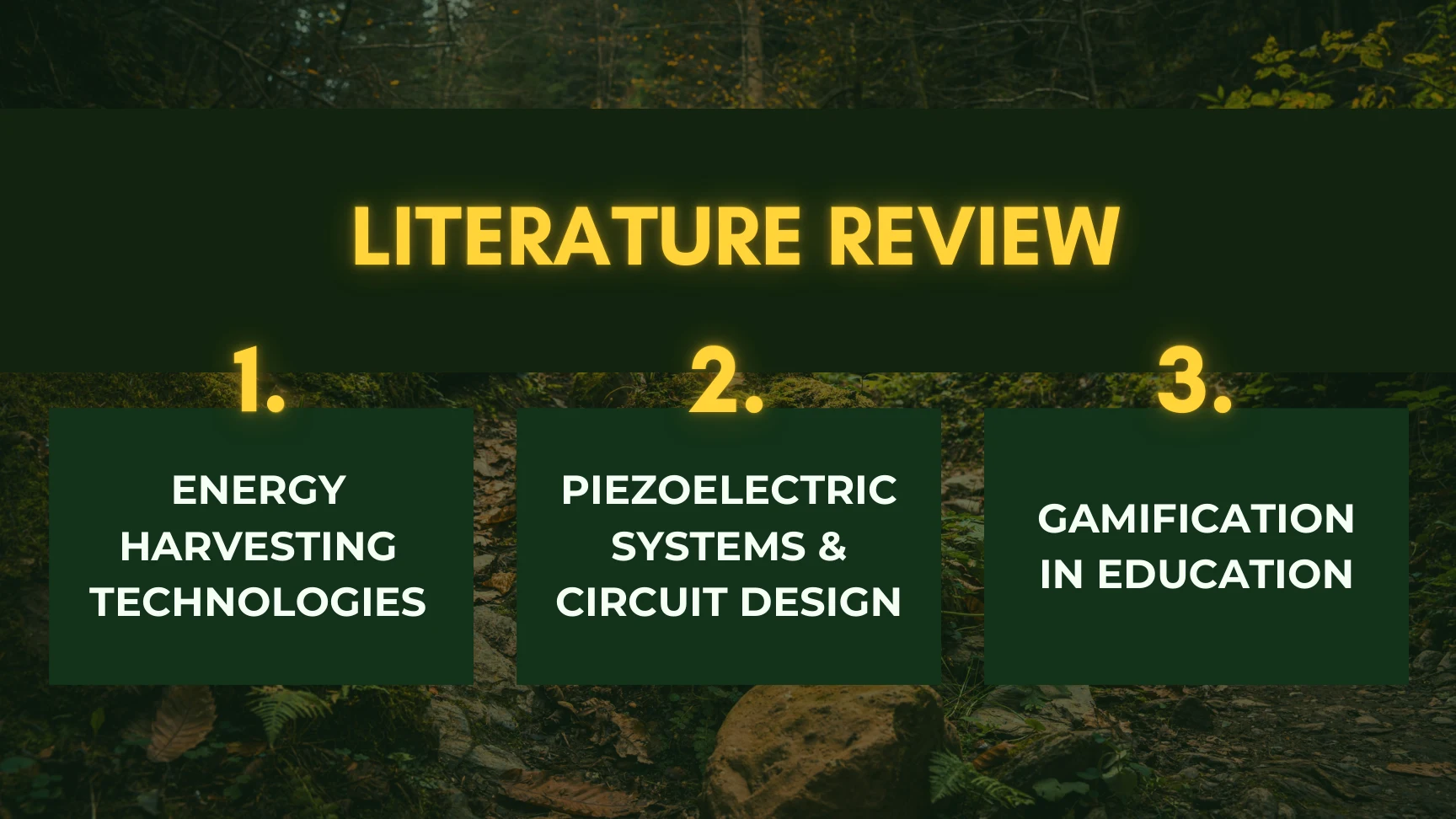
I organized my literature review around three areas: energy-harvesting technologies, piezoelectric systems and circuit design, and gamification in education. I compared different ways of harvesting energy before developing the piezoelectric prototype.
I used Zotero to organize sources and evaluated their currency, relevance, authority, accuracy, and purpose. Activity logs and a Gantt chart helped me keep track of decisions, challenges, and time.
Concept Development and Digital Prototyping
As part of my Extended Project Qualification, I explored how sustainability could become an experiential system, rather than abstract concepts, specifically within educational settings. Through BuzzTile, I aimed to make interaction itself become the medium for learning, investigating how human locomotion can be harnessed as a renewable source of energy.
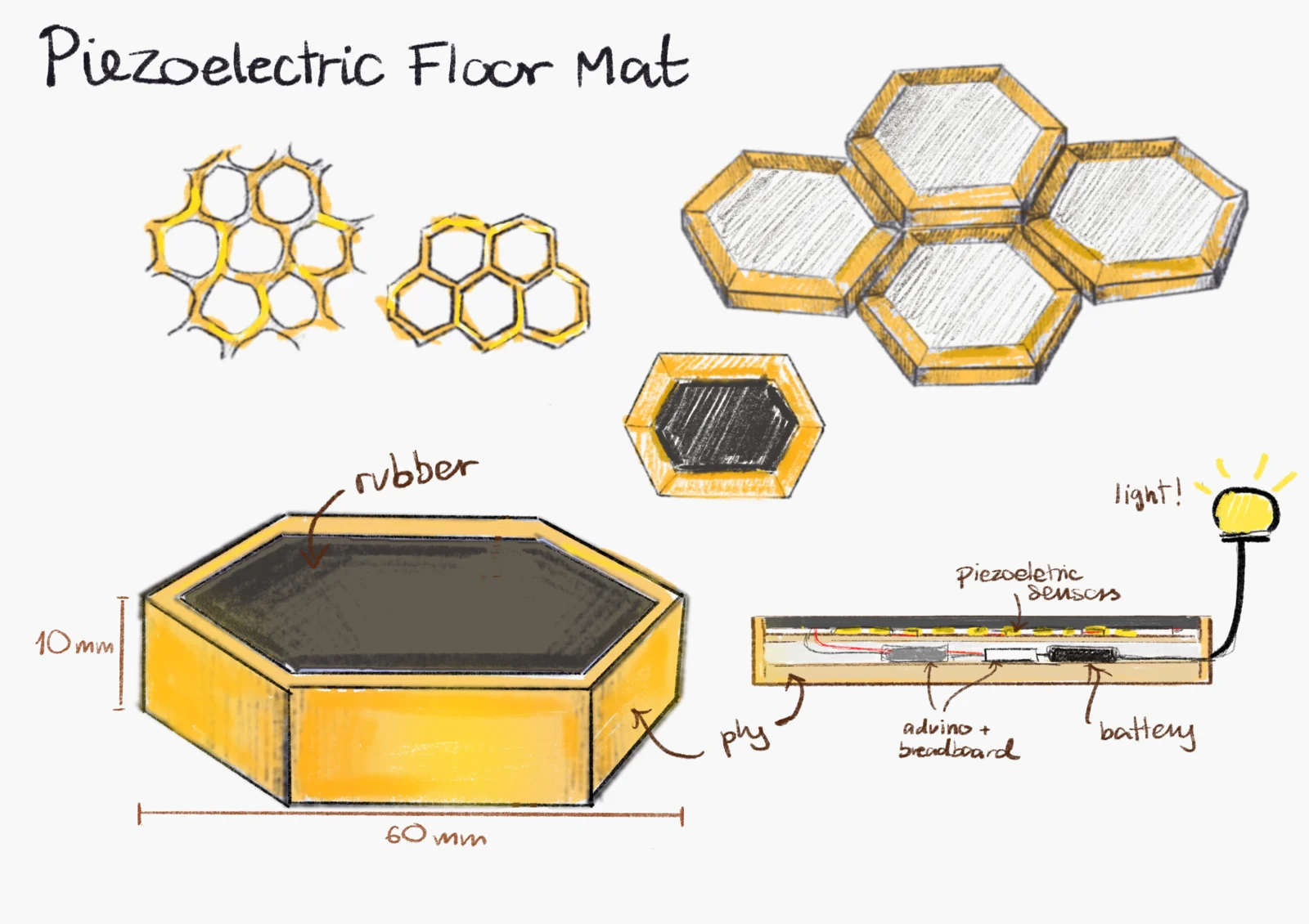
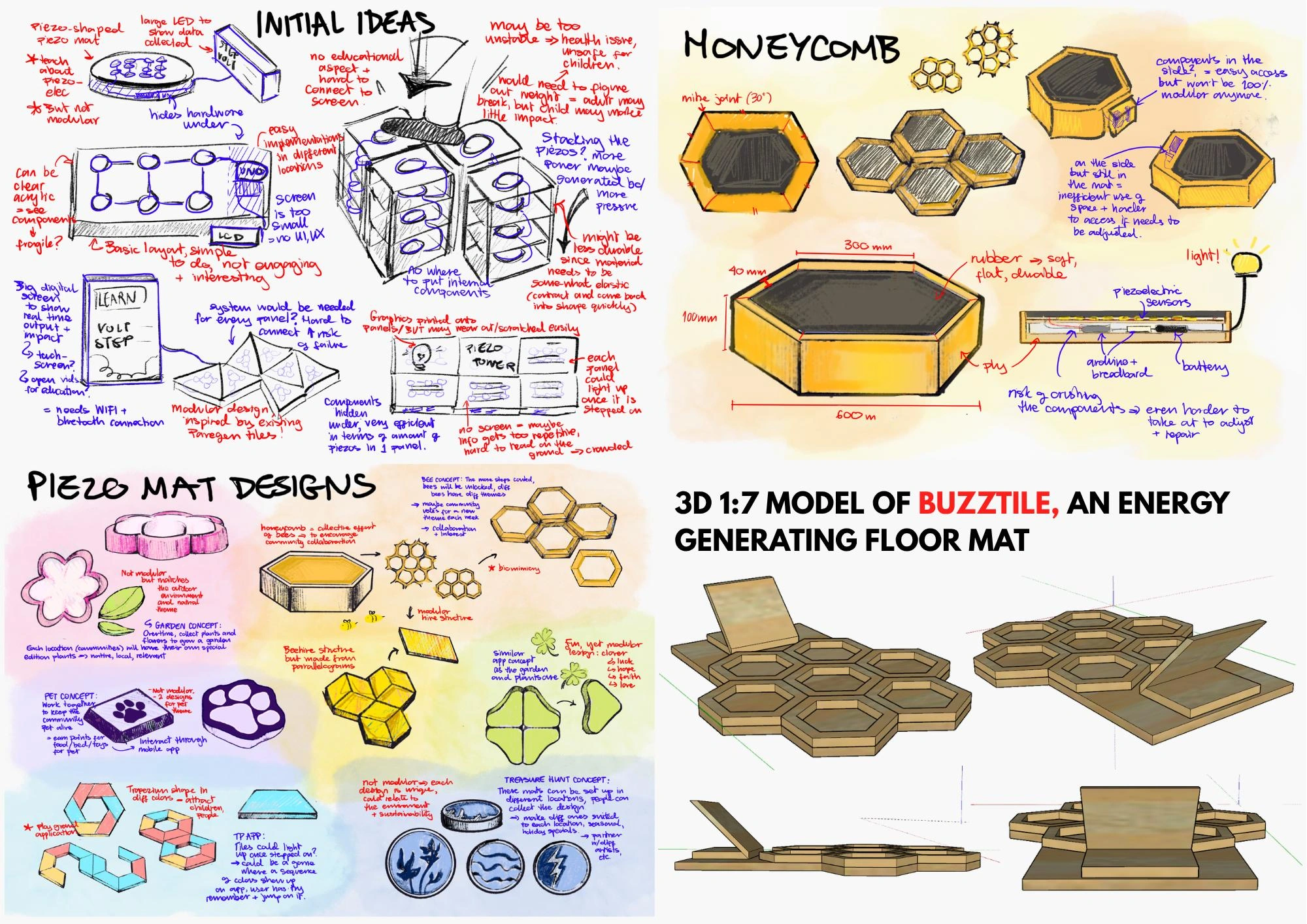
Beginning with ideation in Procreate, I developed concepts that evolved into a honeycomb structure inspired by modularity, efficiency, and the collective participation of bees. I then modeled the design in Fusion 360 to refine my design, considering assembly details and the integration of the piezoelectric sensors. The process deepened my understanding of how design can connect human behavior, technology, and ecology.
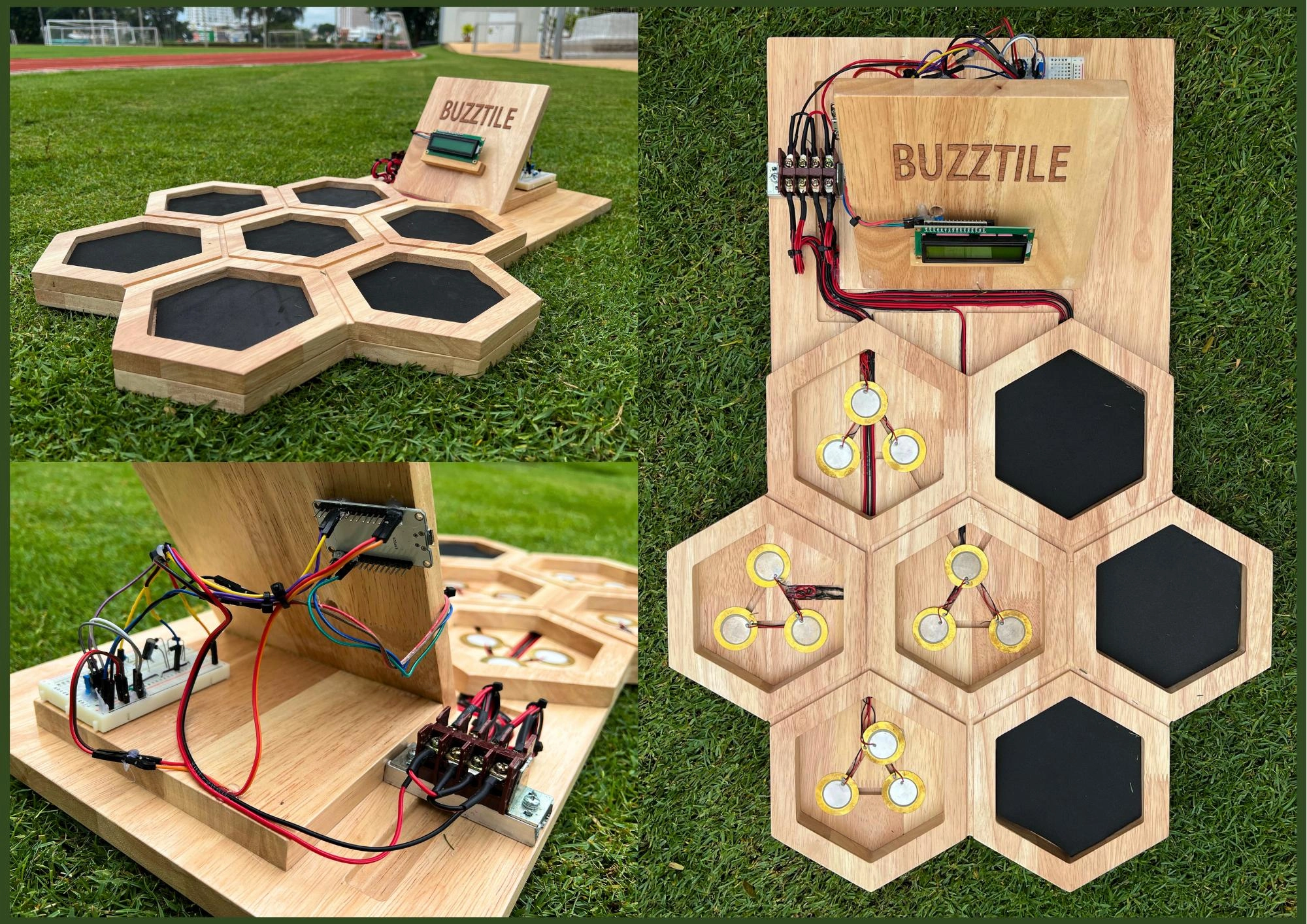
Final Product and Circuit Integration
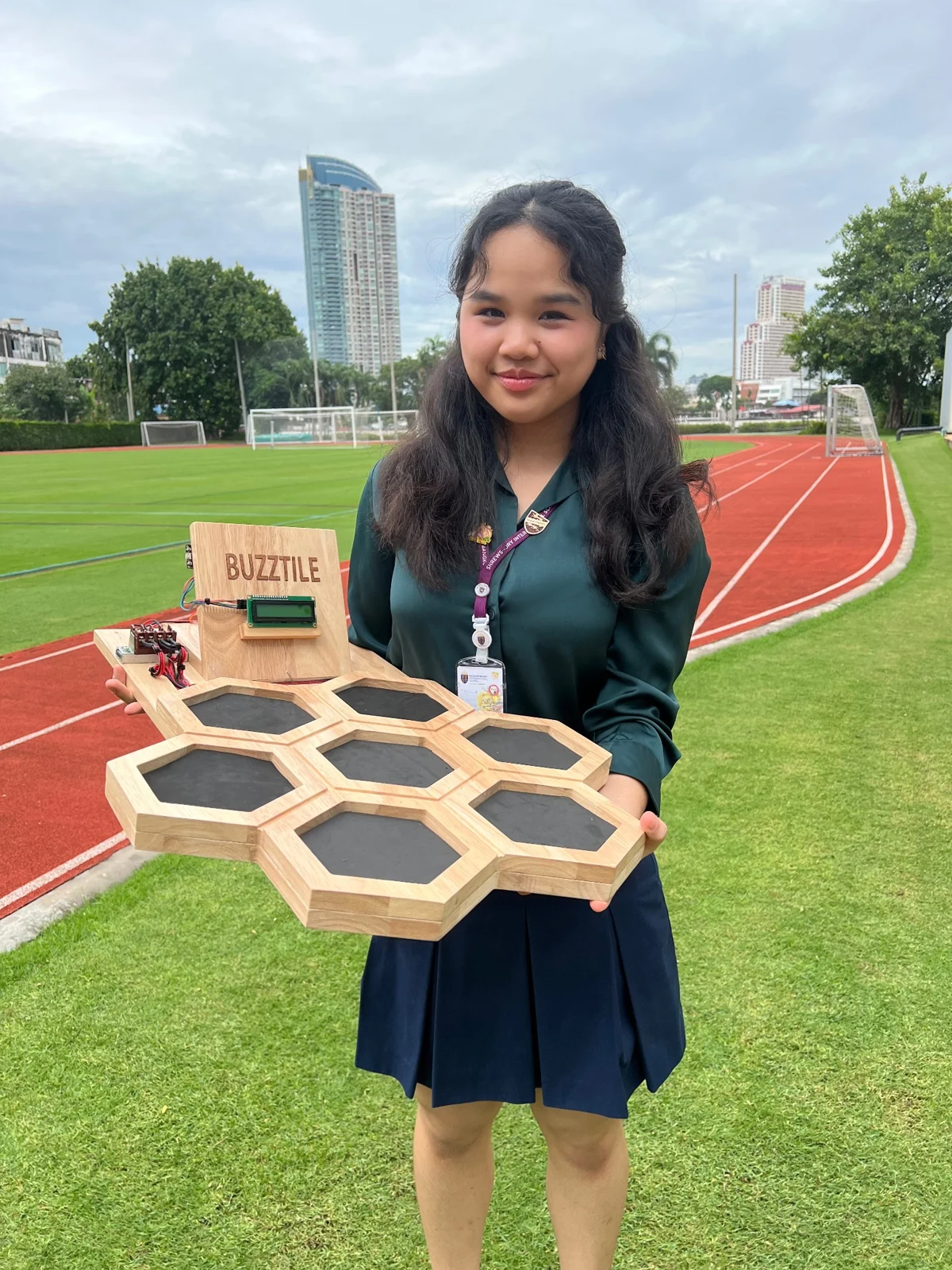
60 × 47 cm
Medium: Piezoelectric sensors, plywood, rubber matting.
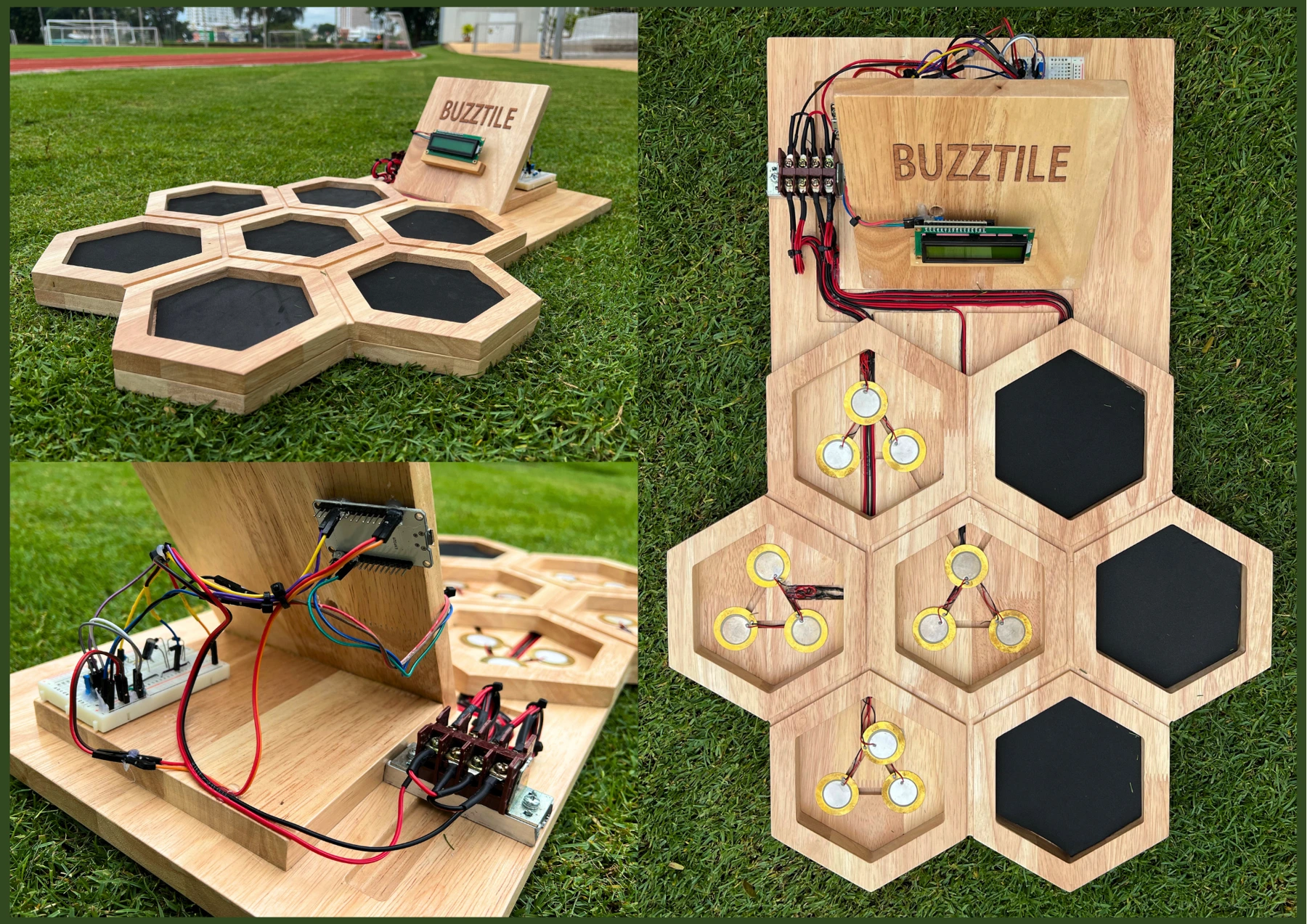
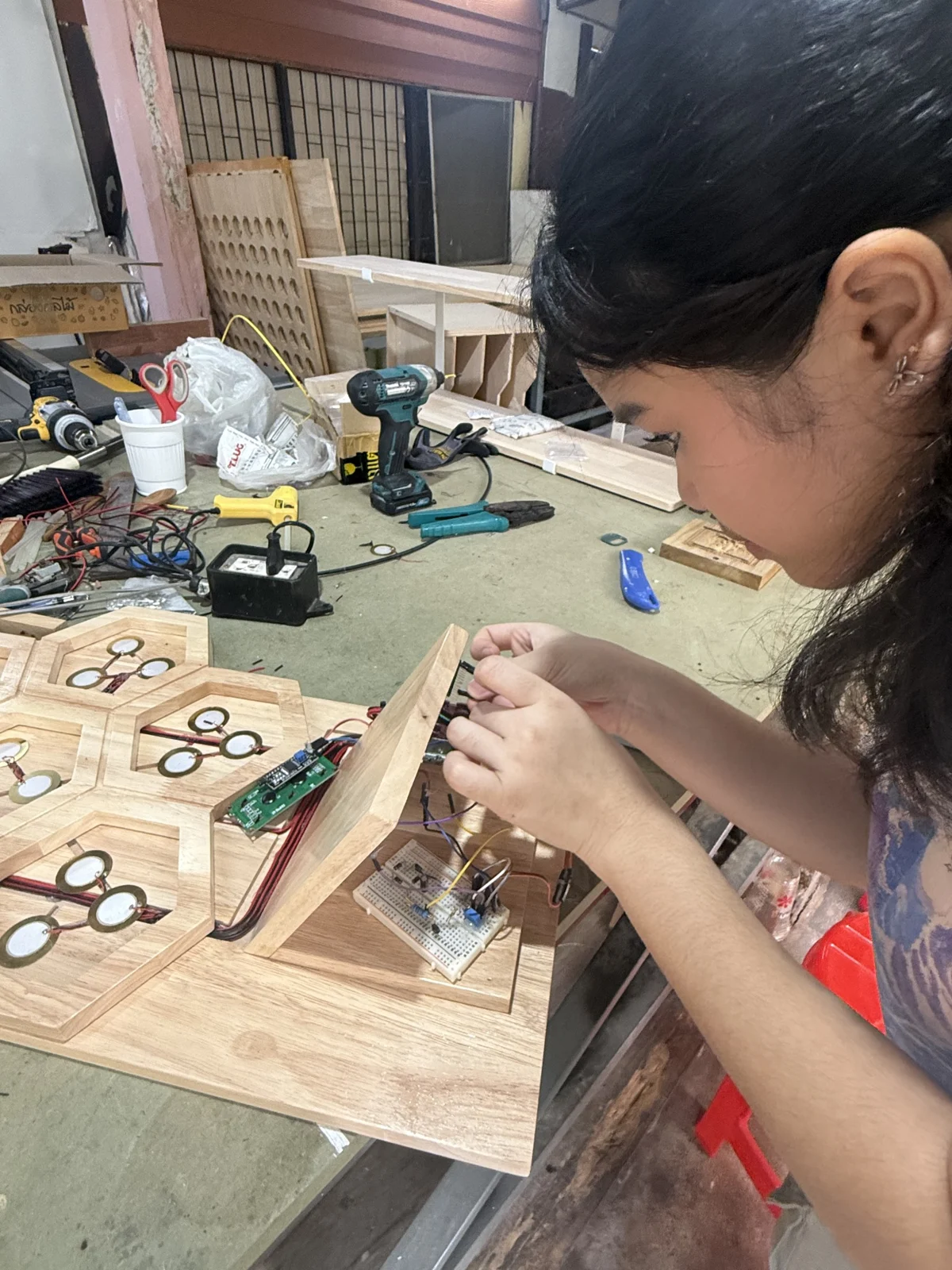
To translate my digital model into a working product, I CNC-milled plywood and layered hexagonal modules to house hardware below. Each tile contained three piezoelectric discs, soldered and heat-shrunk to reduce wiring from six leads to two. The piezos were hot-glued into channels and connected using a terminal block for modular placement and clean routing.
My circuit used 21 piezo sensors, a bridge rectifier, a voltage-smoothing capacitor, and an ESP32 microcontroller linked to an LCD showing live step counts. The five-hour assembly process required precision in alignment, soldering, and fitting.
Creating this artifact spanned a year during which I also wrote a dissertation and conducted research. I failed many times, but each setback helped me improve complexity, optimize layout, and enhance both function and maintainability.
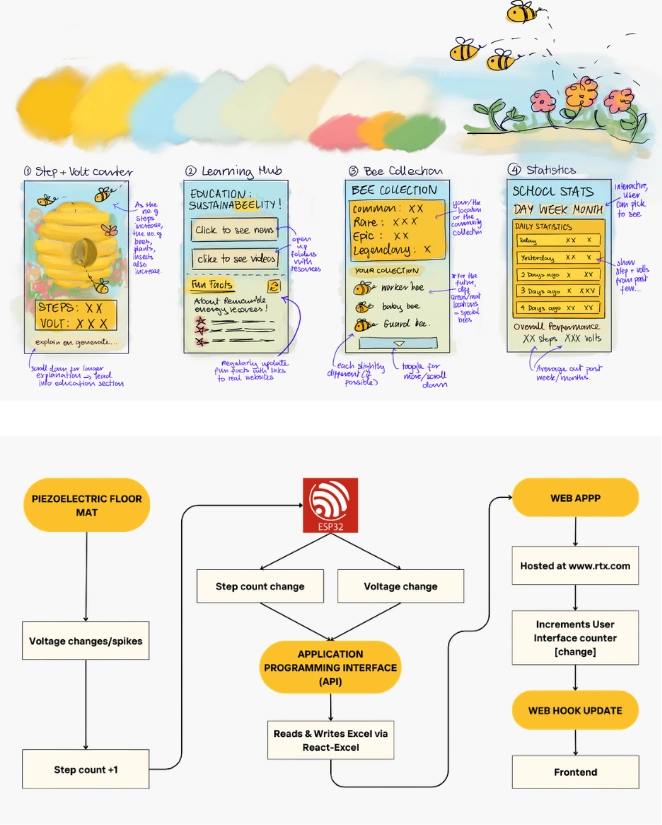
User Interface Design
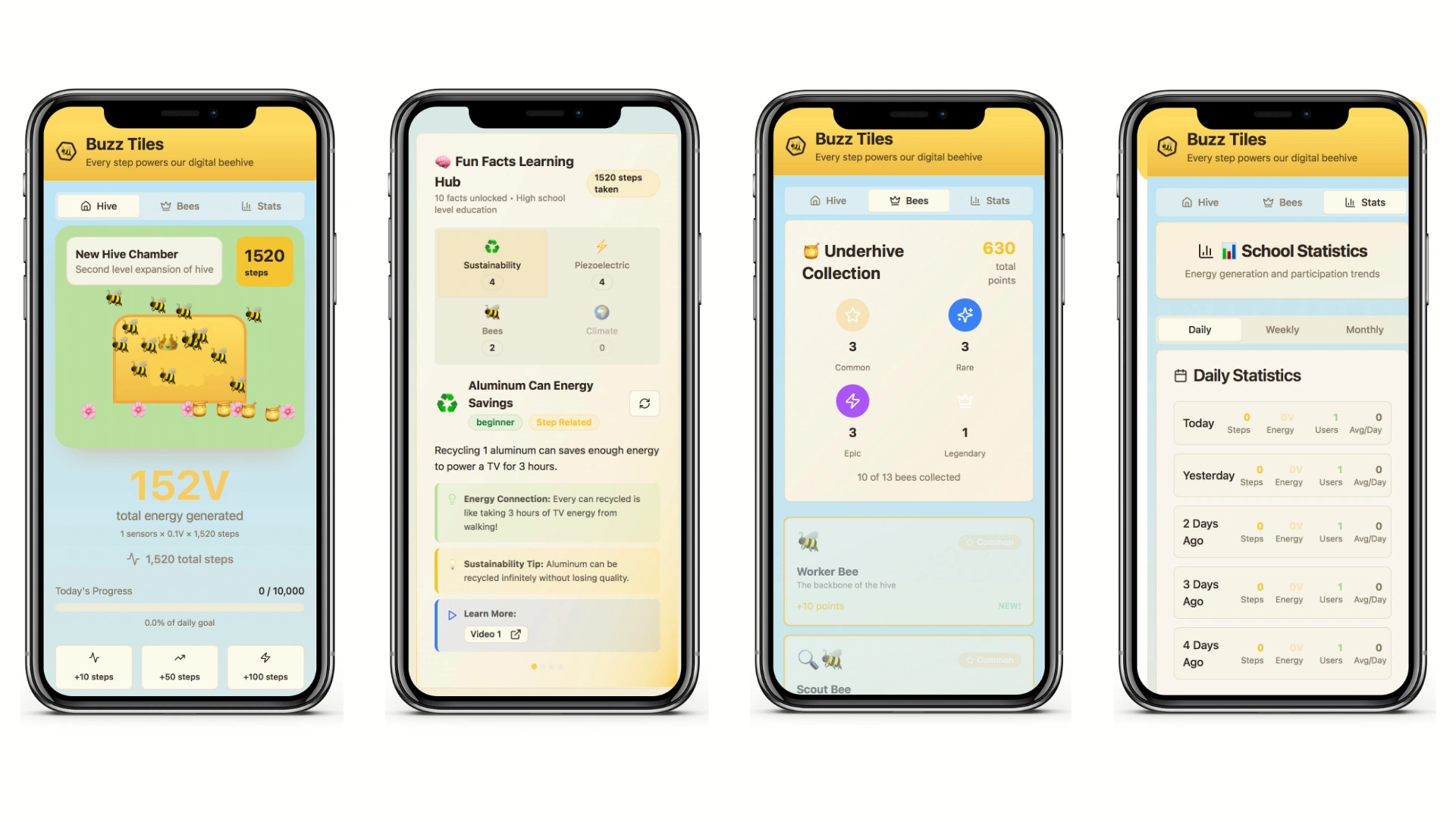
The companion BuzzTile app was my first experience integrating hardware-generated data with a visual front end. I designed a bee-themed interface where each footstep “powers” a digital hive as energy is generated, reinforcing collaboration and environmental stewardship, as everyone in the area—for example, a school community—works together to sustain and grow it.
I built the UI from wireframes to functional screens using HTML, CSS, and JavaScript, applying interaction design and environmental psychology principles so the visuals supported my learning goals. The app connects with the ESP32 microcontroller via Wi-Fi, receiving live data from the piezoelectric floor system and rendering it dynamically through the browser.
This integration turned abstract voltage readings into responsive graphics, transforming movement into visual feedback. This process taught me how thoughtful interface design can bridge physical experience, digital interaction, and environmental awareness.
From the first circuit to the finished tile
18 IMAGES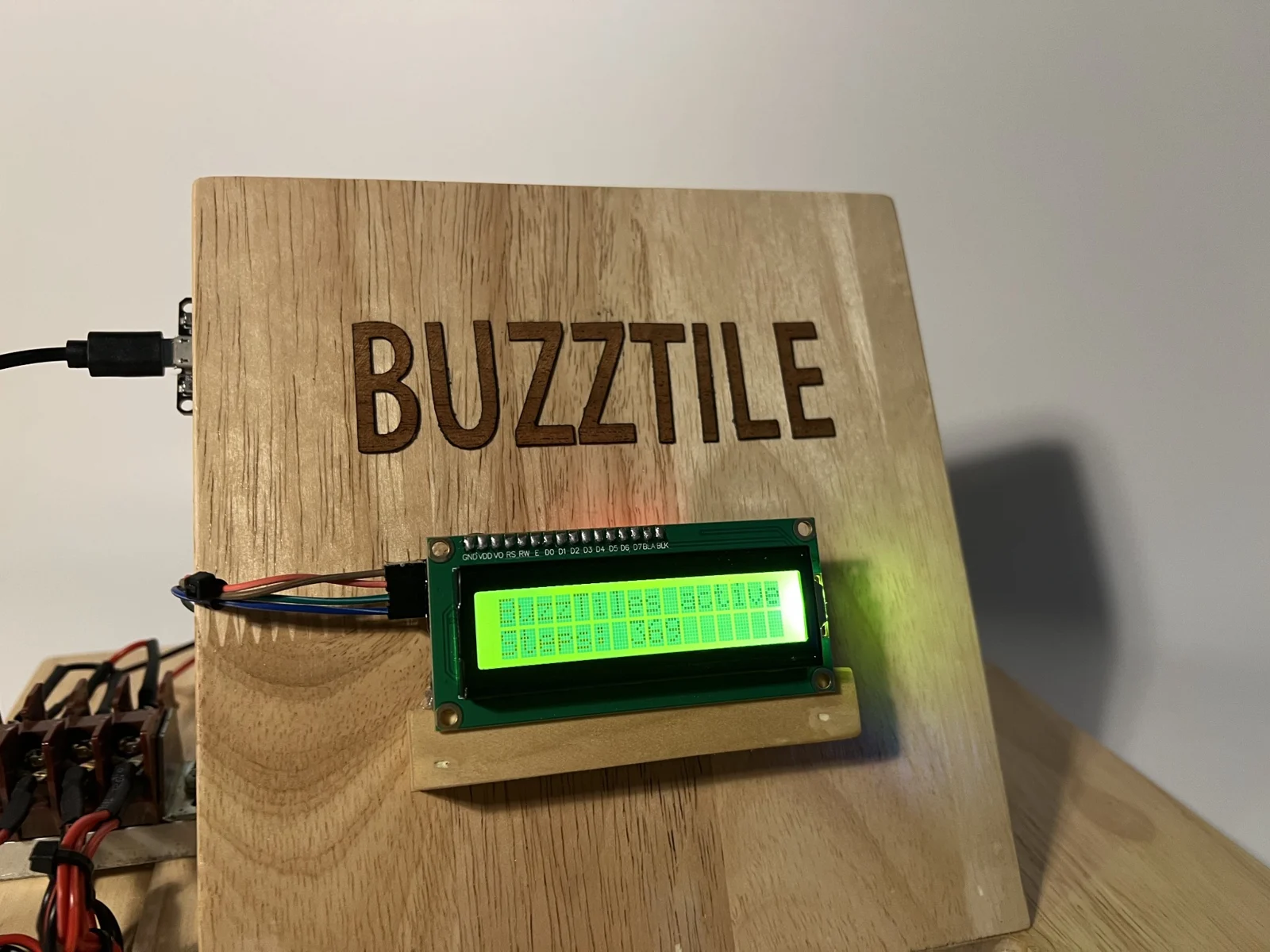
What worked—and what still needs work.
The finished artefact brought the modular tiles, electronics, display, and digital experience together. It gave me a practical way to demonstrate and explore the link between physical interaction and energy awareness.
The project also made the limits clearer. Energy output, long-term sensor durability, and the experience of repeated use need further testing before a real-world installation. I learned to separate a successful prototype demonstration from evidence of performance at scale.
The build taught me how to keep learning.
BuzzTile pushed me beyond the parts of design I already knew. I had to move between research, fabrication, electronics, code, and the experience I wanted people to have. When something didn’t work, I had to understand why—not just try again.
My biggest takeaway was that making a product function and making people want to engage with it are different challenges. The next step is to test both more carefully: improve the physical system and learn from how people actually use it.
The process behind the prototype.
My original 29-slide EPQ presentation, covering research, ideation, circuitry, UI design, fabrication, and reflection.