Tony’s Table
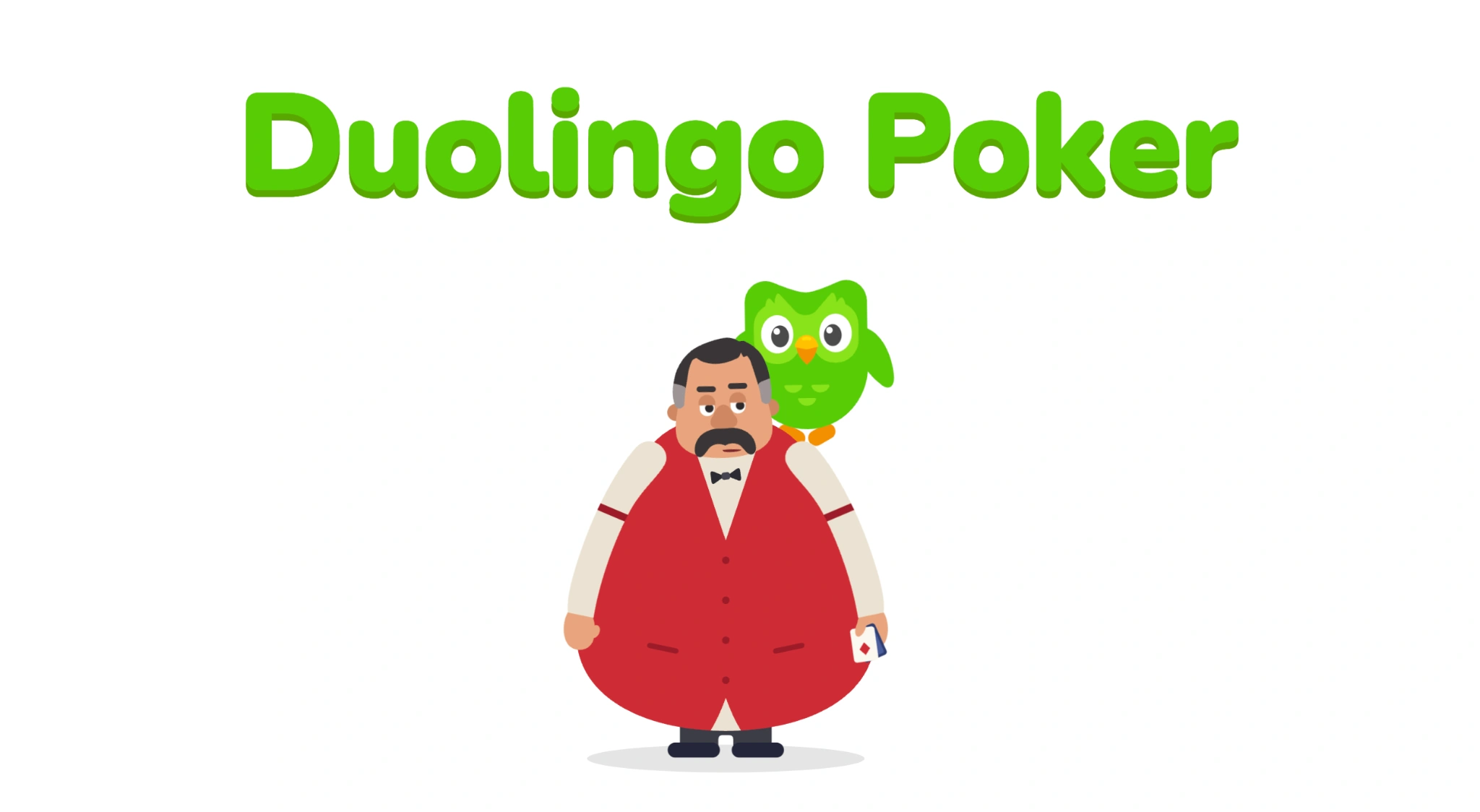
A poker teacher with the perfect poker face.
TWO-WEEK TEAM PROJECT · COMPLETED 12 OCTOBER 2026
Your first hand with Tony.
Start with the basics, choose an answer, and let Tony guide you through a beginner poker lesson.
Learn by playing.
Pick an answer, check it, and let Tony guide your next hand.
Learn the game. Without the stakes.
Our team imagined a beginner Texas Hold’em course for Duolingo, led by Tony: an experienced player who has seen almost every hand and reacts as though nothing surprises him anymore. We wanted his dry humour and steady presence to make a new subject feel approachable.
In two weeks, we developed a character-led lesson concept and pitched it for Innovator’s Forum. Our proposal focused on learning through small steps, instant feedback, and mistakes that explain what to try next.
A new face. A new way to learn.
Prompt 2 asked us to develop a new Duolingo world character and a concise, 10-question lesson for beginners. We chose the option of introducing a subject not already on Duolingo, and built our pitch around the fundamentals of poker.
The brief asked us to stay consistent with Duolingo’s illustration style, think about how the lesson corrects wrong answers, and use the character to encourage someone to start and stay engaged.
Read the original brief ↗Let curiosity lead, not competition.
Our target audience was adults aged 18–29 who were curious about poker but had never learned it. The team’s pitch contrasted a learning-first course with platforms whose lessons sit alongside a commercial poker offering.
We wanted to give beginners somewhere to practise without wagering, and to make the rules feel less intimidating before they encounter a real game. This was our proposed audience and learning approach, rather than a measured user outcome.
Nothing surprises him. That’s the point.
“He’s dealt millions of hands, seen just about every play there is, and at this point, there’s nothing that surprises him anymore.”
We imagined Tony as someone who had been playing poker all his life. His bored expression was deliberate: he is experienced enough to stay calm, and his perfect poker face makes that experience immediately readable.
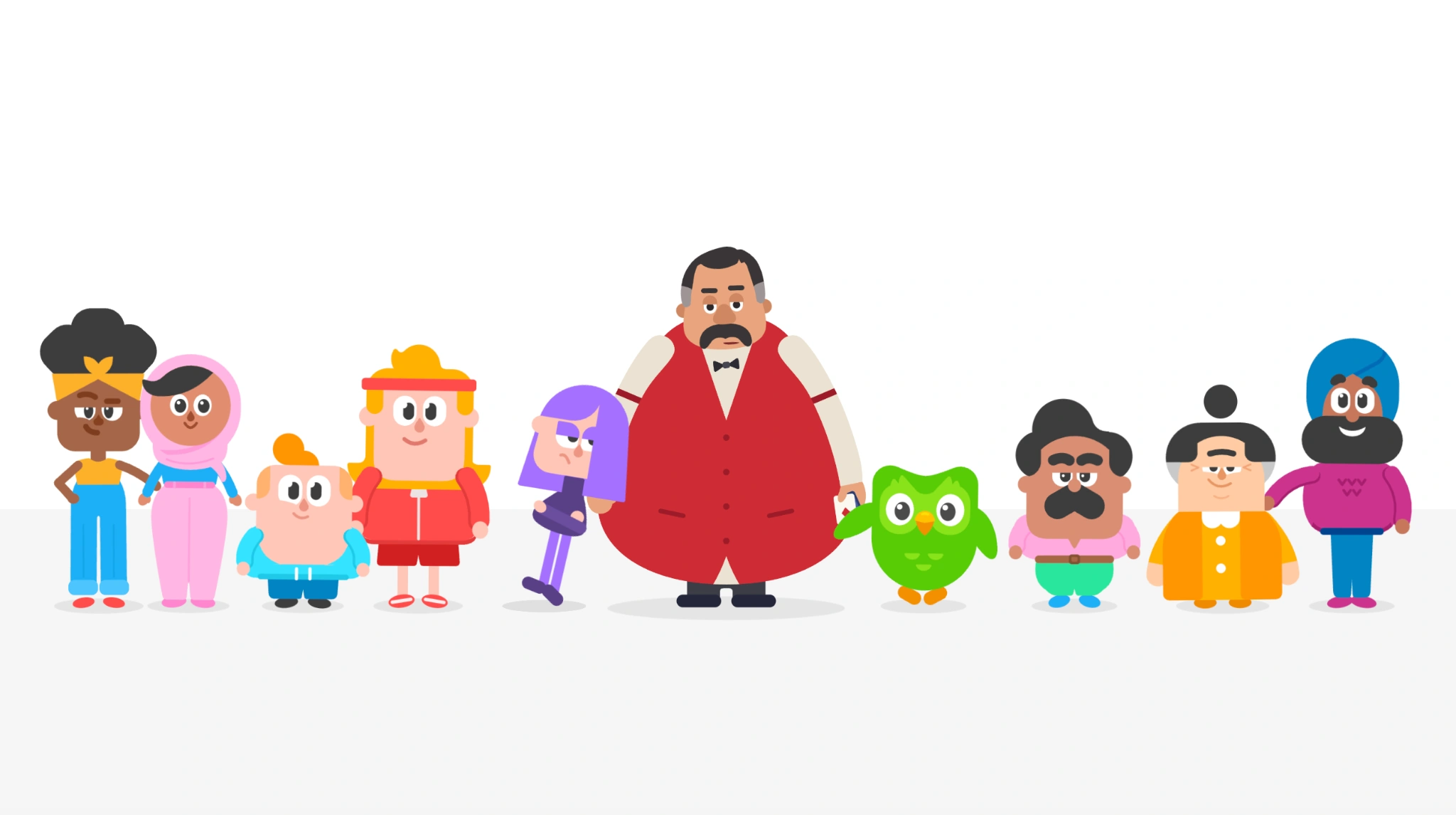
In my part of the pitch, I explained how we took inspiration from Lily’s dry, seemingly careless humour. We wanted to retain that recognizable Duolingo energy while giving Tony his own personality and backstory.
The team also considered how his palette, proportions, and visual elements could sit naturally within Duolingo’s character family.
Small questions. A little more confidence.
01 / 06 · Start from zero
- STEP 01
Start from zero
Select Texas Hold’em and “never played,” then begin with the basics.
- STEP 02
Build a reference
Keep a breakdown of poker hands accessible while introducing the rules.
- STEP 03
Make the first match
Begin with suit matching before increasing the complexity of the questions.
- STEP 04
Let Tony respond
Use small character reactions after selections and checks, with a larger reaction after three correct answers in a row.
- STEP 05
Explain the mistake
Show why the correct answer is right, rather than only marking a beginner wrong.
- STEP 06
Keep the momentum
Bring trial and error, feedback, and character personality into one short learning experience.
You’ve seen the thinking.
Now take a seat.
Lesson flow described in our team’s presentation script. Try it in the interactive demo below.
A character can do more than decorate.
This project pushed me to think about personality as part of the learning experience. Tony’s expression, backstory, and reactions needed to support the lesson, not simply make it look more entertaining.
Explaining those choices in a short pitch helped me connect an intuitive creative idea with a clear reason for it. The next step is to test whether Tony’s humour and feedback help real beginners understand poker and feel comfortable making mistakes.
Student team concept created for the Duolingo × Iovine and Young brief. Not a released Duolingo course. No learner-testing results are claimed.