EcoPinet
2022 — PRESENT
Turning Waste into Value.
Upcycling pineapple waste into sustainable, regenerative, seed-embedded paper and packaging.
I co-founded EcoPinet to tackle PM2.5 and plastic pollution by turning discarded pineapple leaves into 100% biodegradable paper and packaging. What started as a small idea became a way to bring creativity, responsibility, and community together.
MY ROLE · TEAM OF 3
- Co-Founder & Chief Creative Officer
- App design
- Visual communication
- Business strategy & pitching
SKILLS GAINED
- Material exploration & circular design
- Community collaboration
- UI design & gamification
- Business planning & pitching
Project gallery
17 PHOTOGRAPHS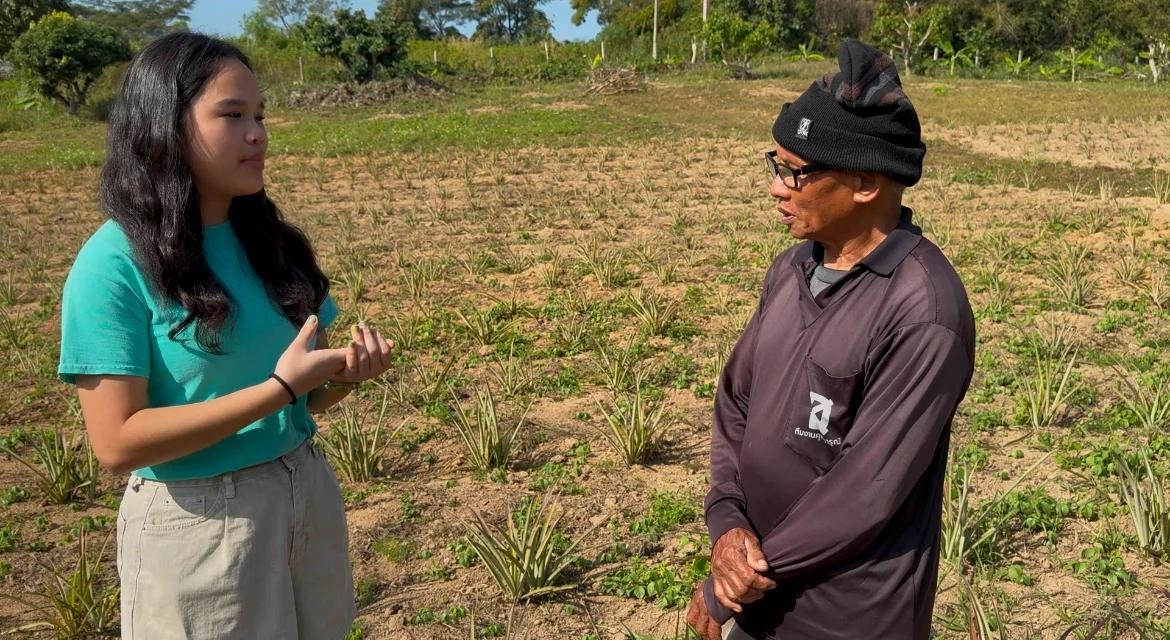
Waste shouldn’t be the end of the story.
Discarded pineapple leaves are often burned to clear farmland, contributing to air pollution. At the same time, single-use plastic packaging leaves behind a different kind of waste. I wanted to explore whether one problem could help us address the other.
Working with farmers made the challenge more real. A solution had to fit their everyday lives, offer an additional income stream, and give them a reason to participate.
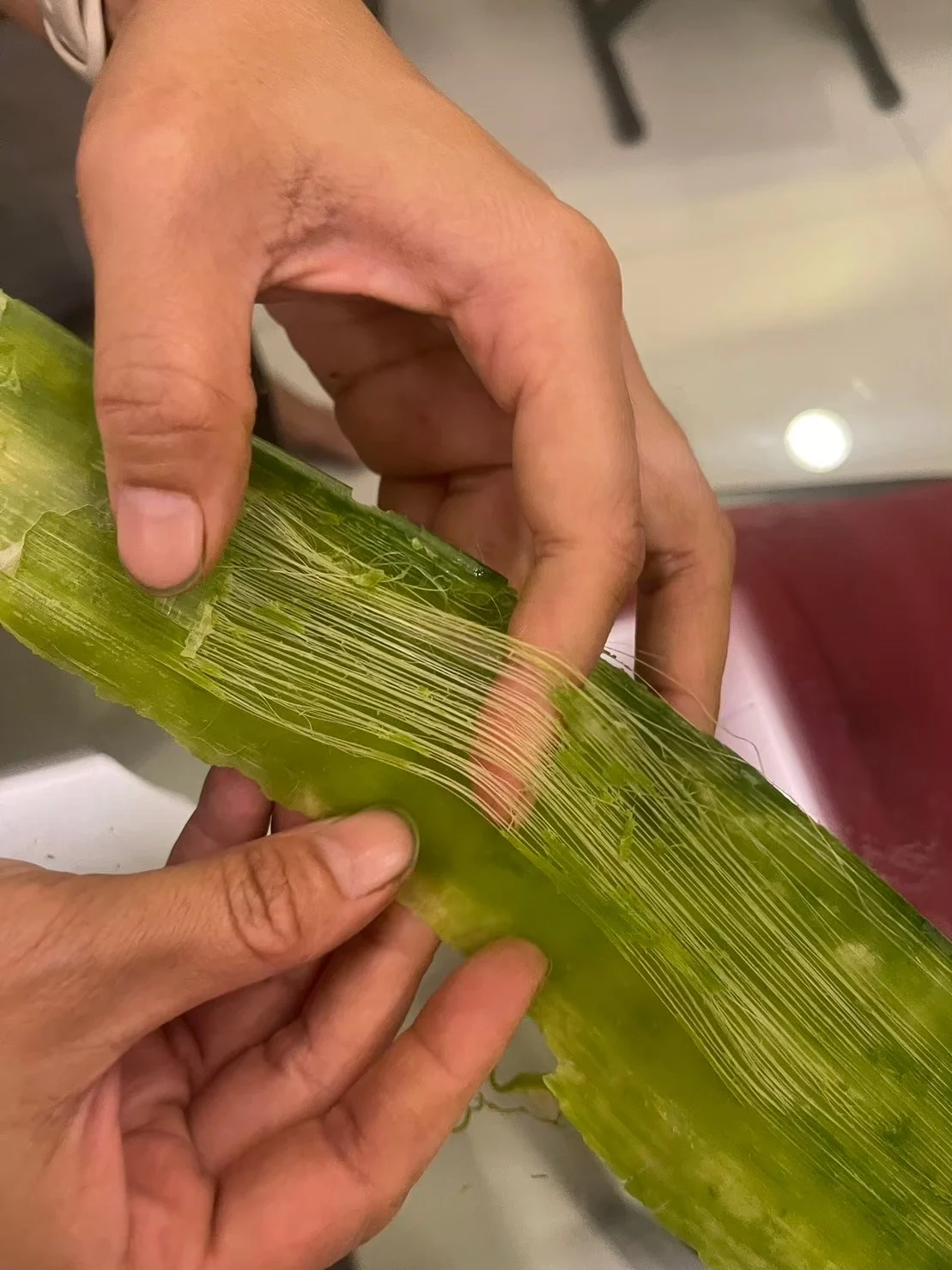
From discarded leaves to new beginnings.
We collect pineapple waste and turn its fibers into biodegradable paper and packaging, embedding seeds so the material can be planted after use. We worked with 45 farmers across three provinces, teaching our upcycling methods and converting more than 260kg of pineapple waste into seed-embedded products.
The process matters as much as the product. By working with farming communities, we connect material collection, skills, and new income opportunities to a shared environmental goal.
Making participation feel possible.
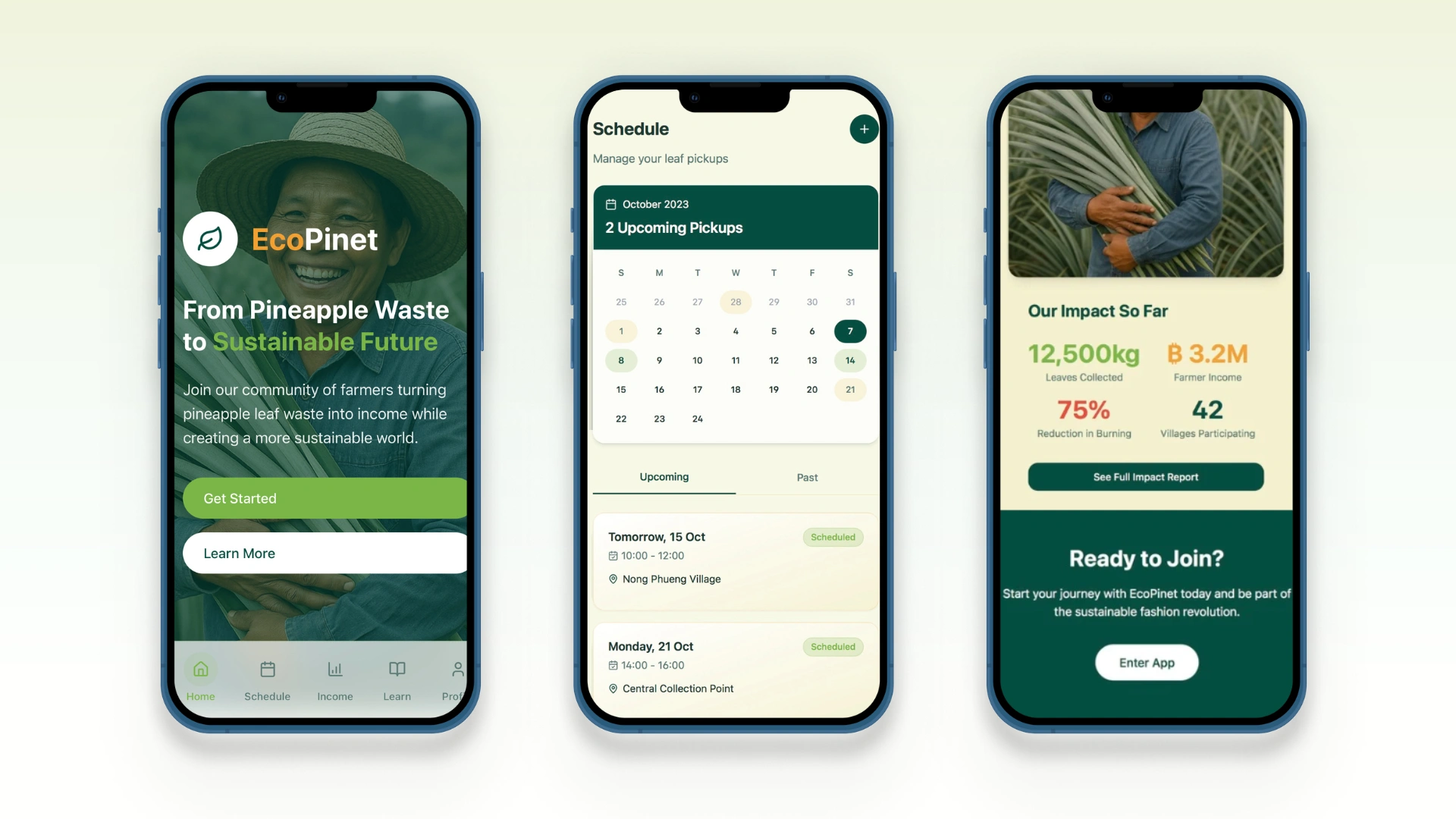
I developed a gamified app design to connect our team with the farming community. The concept brings pickup scheduling, income tracking, learning resources, and merit-point rewards into one place. Farmers can see their contribution and exchange points for tools, seeds, or fertilisers.
A good idea needs a way to grow.
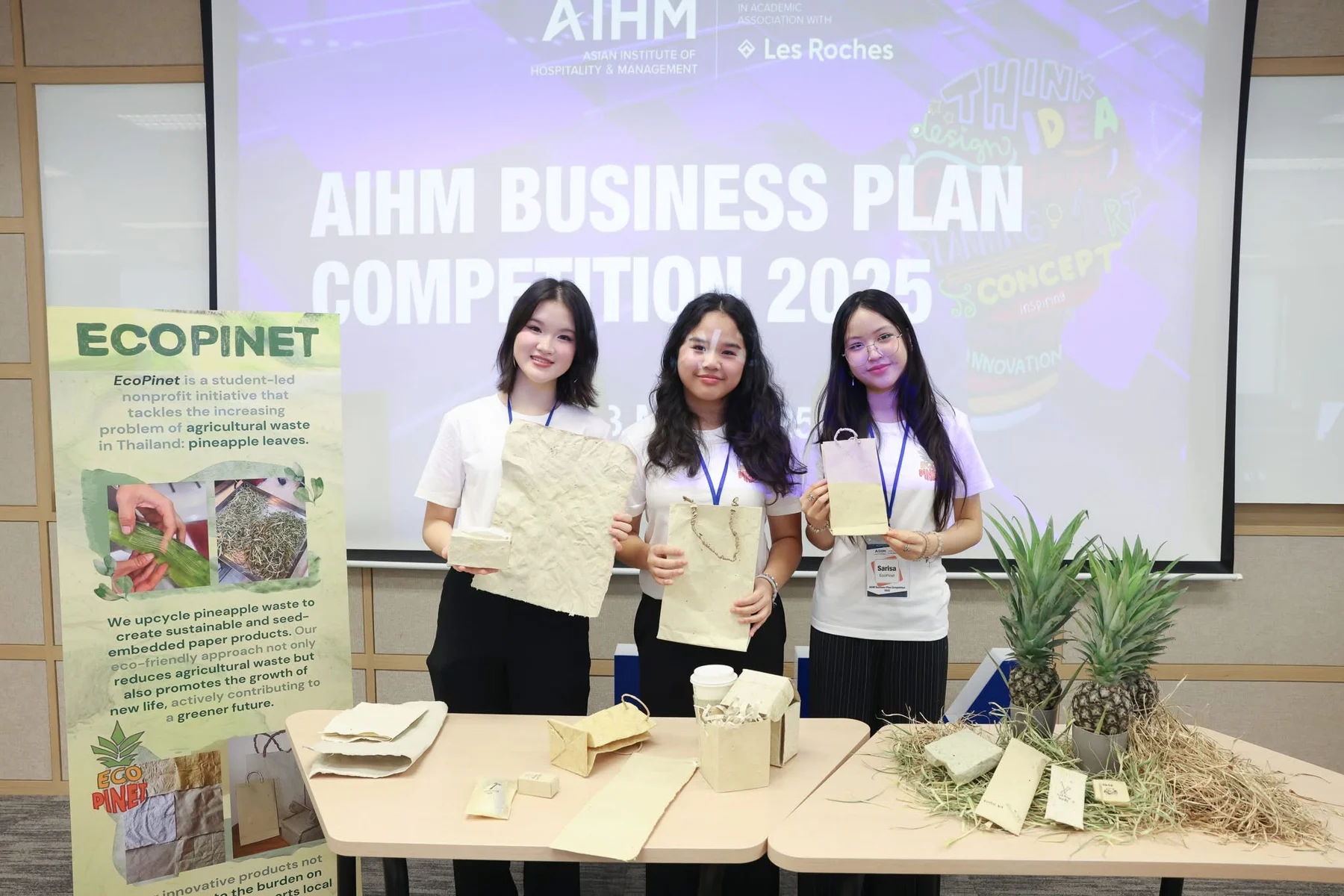
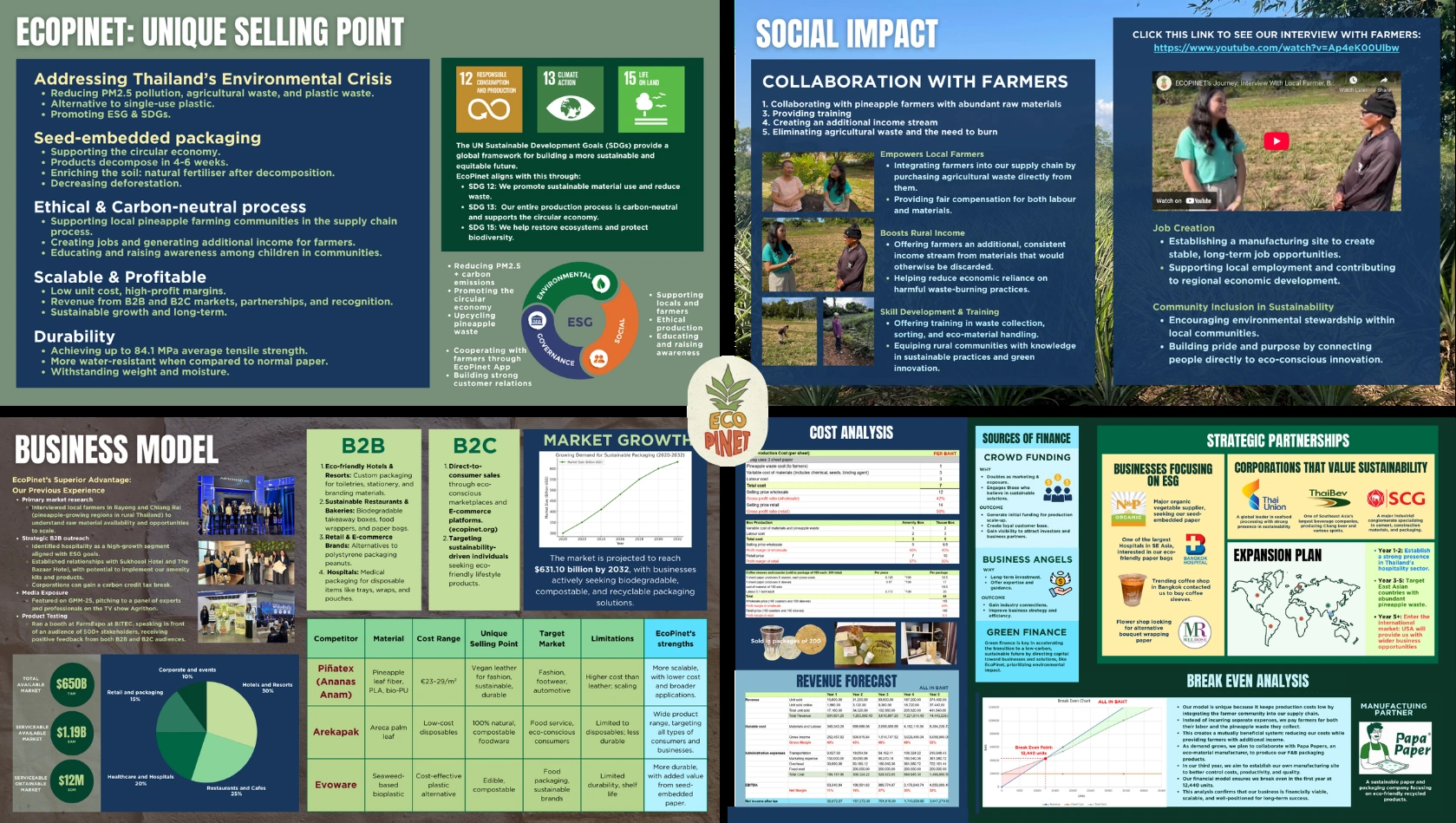
I pitched EcoPinet to a panel of experts to support sustainable tourism and the hospitality industry. I developed the pitch deck, strategies, and Q&A prompts, connecting our environmental purpose to a practical business model. We won first place in the 2025 AIHM Business Plan Competition and received $1,300 in venture funding.
Our plan explores hospitality, restaurants, retail, and direct-to-consumer channels. It considers costs, financing, and production partnerships so the idea can move beyond a prototype. Financial forecasts and expansion plans are projections.
From pineapple leaves to a wider conversation.
EcoPinet began with a question: what if we saw value where others saw waste? Taking the idea beyond our team meant connecting people with different motivations—from farmers to hospitality partners—and learning how to communicate a shared purpose.
Awards
Diamond Challenge
Social Innovation Track · Finalist
Top 13%Asian Institute of Hospitality Management
Business Plan Competition · 1st Place
Out of 33 applicantsAgri-innovator AGRITHON
ESG Category · Finalist · 2024
First youth-led team featured on GMM-TVFeatures
Our work has been shared through press, newsletters, and video features, with national startup coverage on GMM25 and Channel 3.
The thinking behind the pitch.
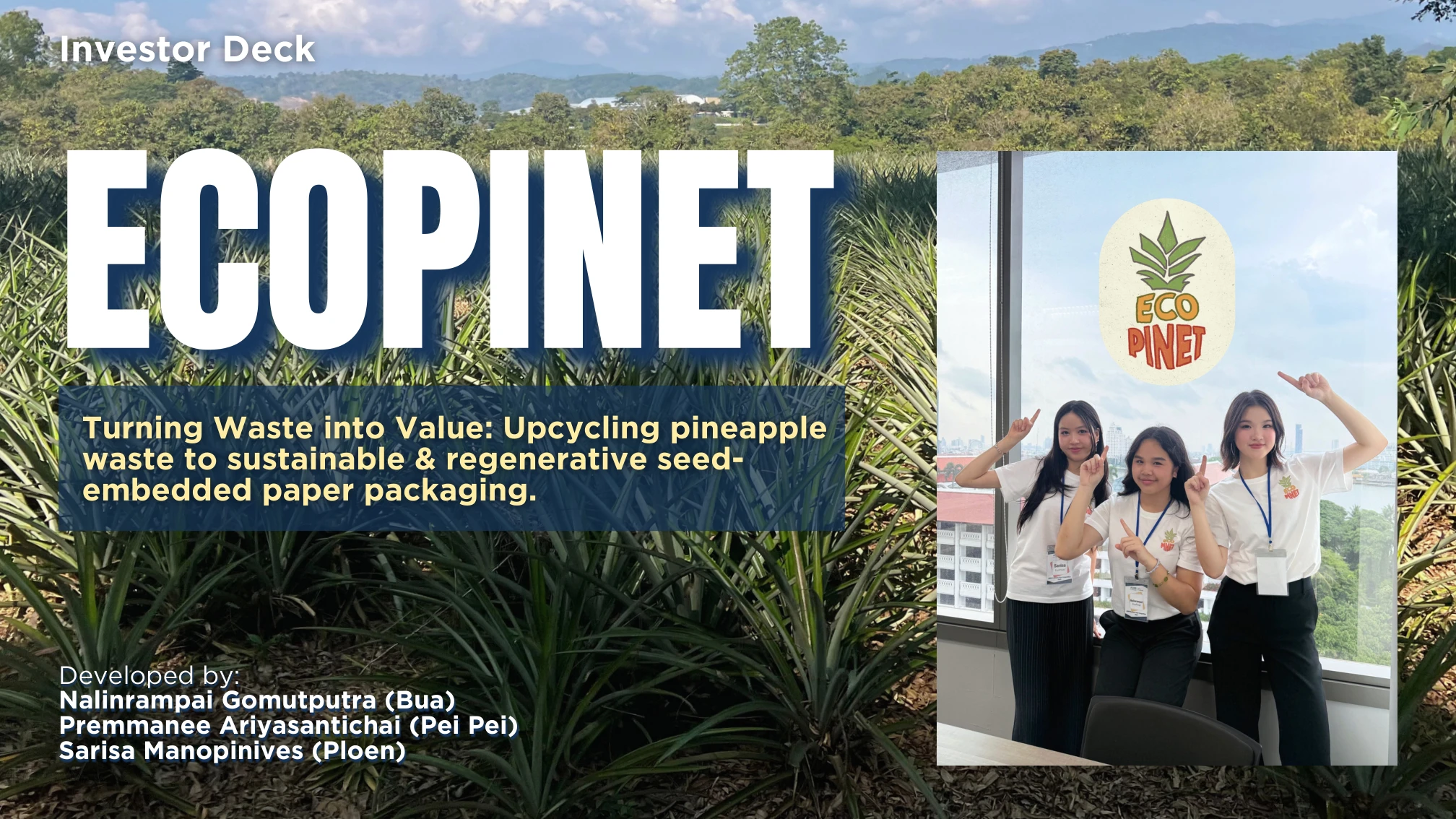
Original investor deck. Market estimates, financial forecasts, and expansion plans reflect the pitch materials.
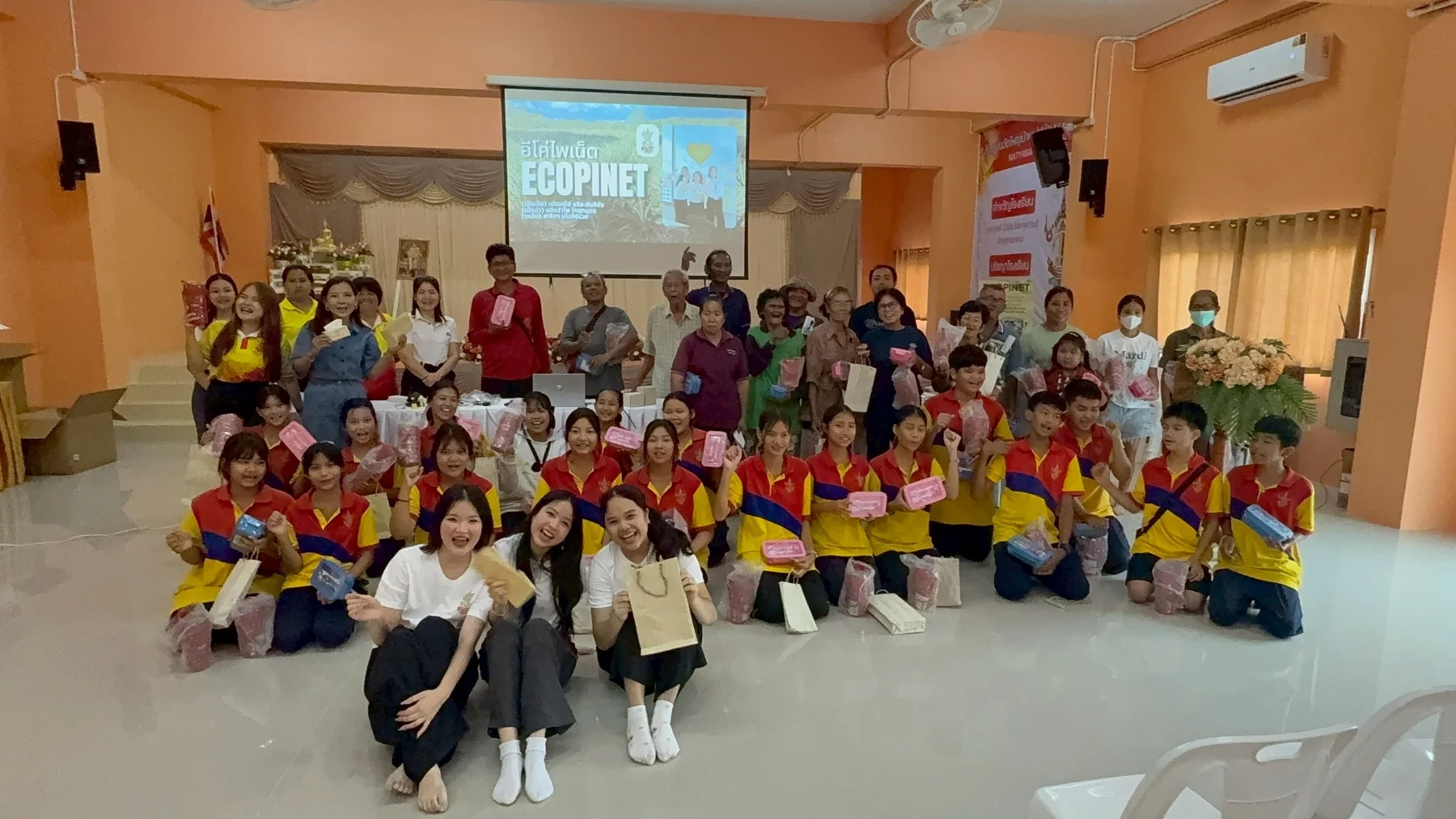
Small ideas. Shared purpose. Real possibilities.
EcoPinet taught me that a solution becomes stronger when the people it is meant to serve help shape it. Our team brought different interests in design, business, and environmental science, while farmers brought knowledge we couldn’t learn from a desk.
For me, EcoPinet is about uniting creativity with responsibility. It showed me how even a small idea, nurtured with purpose and the right people, can become something tangible for both people and the planet. I’m taking that lesson into every project I build next.